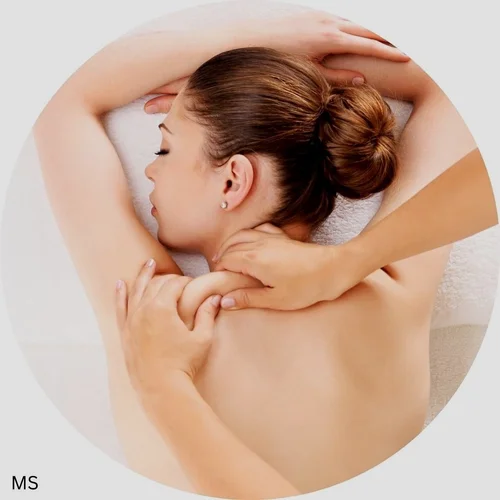
Massage Techniques
Soft tissue and deep tissue massage techniques are the basis of most myotherapy sessions. Your Myotherapist with be ‘reading’ your body with their hands, finding the trigger points (knots), areas of tension or imbalance, and finding any restrictions.
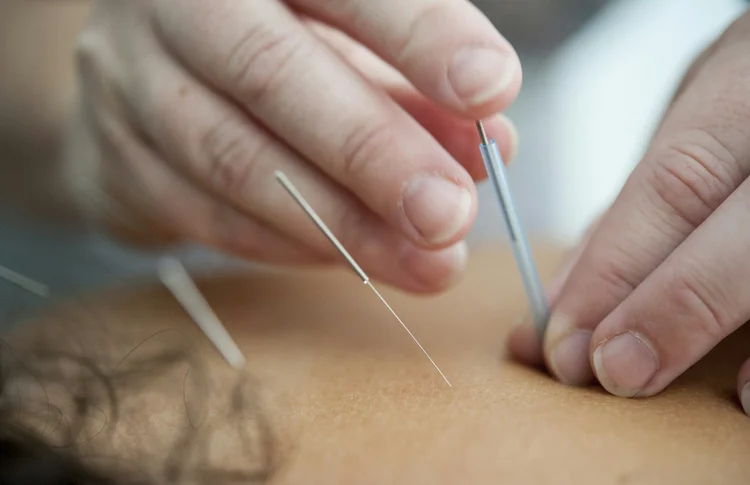
Dry Needling
Dry needling is an effective treatment technique that involves the insertion of a thin sterile needle into a trigger point (knot) to relieve muscle tension, improve blood flow, and promote healing.
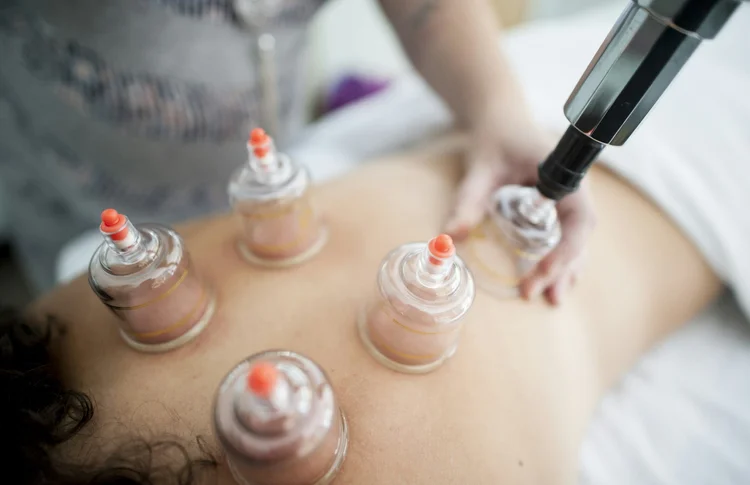
Cupping
Myofascial cupping is used to help relieve tension in the connective tissue of the body called fascia. The suction generated in the cup picks up and stretches out the tightened fibers, increases blood flow and promotes overall relaxation.
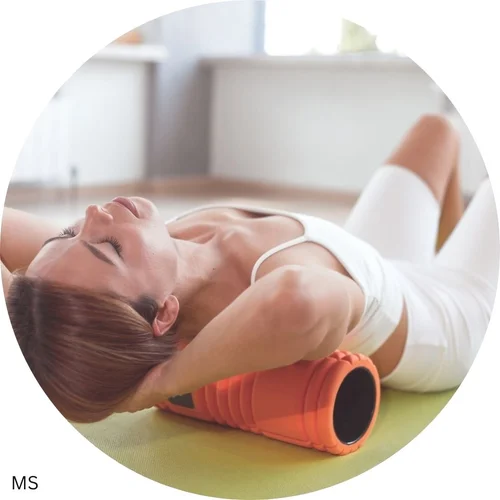
Corrective Exercises
Most sessions will include you’re Myotherapist showing you some stretches or exercises that will assist in achieving your health goals.
What conditions can be treated with Myotherapy?
- Back pain: chronic and acute
- Neck and shoulder pain and tension
- Tension headaches
- Frozen shoulder
- Repetitive strain injuries: ie. tennis elbow, golfer’s elbow, carpel tunnel
- Muscle aches associated with chronic conditions: fibromyalgia, chronic fatigue etc
- Sports event preparation and recovery: marathons, football season etc
- Preparation and recovery from orthopedic surgeries: ie. hip and knee replacements, back surgery
- Sporting injuries
- Sporting injuries
- Sporting injuries
What to expect in a Consultation
What to expect with Dry Needling
-
Assessment: In the course of your treatment your Myotherapist will have found any trigger point or tight bands that are causing you pain.
-
Needle Insertion: The skin is prepped with an alcohol swab and then your Myotherapist will insert the needle into the trigger points or affected areas of the muscle. The practitioner may manipulate the needle to create a twitch response, which indicates that the muscle is releasing tension. Needles might be left in for a few moments or up to half an hour, depending on what the goal of the needling is.
-
What you might feel: whilst everyone is different, generally speaking the insertion or manipulation of a needle only creates a brief pricking pain. Sometimes when the needle is entering the muscle it can cause an aching pain which recedes over time as the needle is left in. The muscle can also sometimes twitch, this can be a disconcerting and sometimes painful sensation, however it is brief and any pain recedes once the needle is left to rest or is removed.
What to expect in a Consultation
A lot of people feel nervous about, or flat out don’t want, dry needling. That’s FINE! Your body, your choice!
Book Your Appointment Today
For Best Results, start with an Assessment and Treatment, so a Plan for your Success can be Created